Key facts: Water Damage Restoration
What water damage restoration includes
Restoration brings together several trades of work: removing water, drying what stays, cleaning, and rebuilding what cannot be saved. A leak under a sink might need a day of drying. A flooded home may need weeks of work across every room.
The first decision is about the water itself. Clean water from a supply line behaves very differently from sewage or river water, and it decides what is salvageable and what protective gear the crew needs.[3]
The restoration sequence
Whatever the size of the job, the order rarely changes.
- 1
Stop and assess
The source is stopped and the building checked for electrical and structural hazards.
- 2
Document
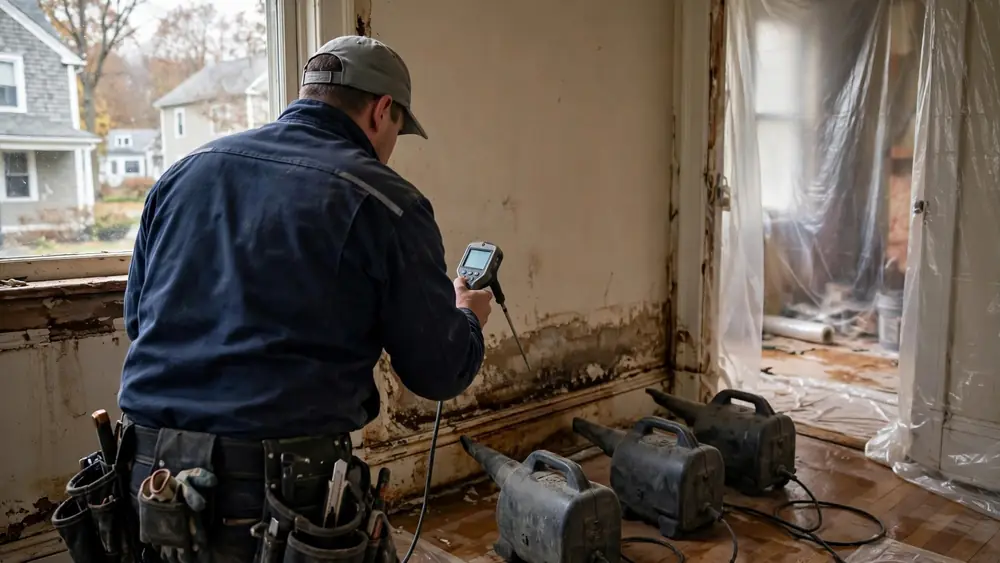
Photos and moisture readings record the starting condition, which is useful for any insurance claim.
- 3
Extract
Standing water comes out with pumps and vacuums, since removing liquid is far quicker than evaporating it.
- 4
Remove what cannot be saved
Wet pad, soaked insulation and contaminated materials are taken out.
- 5
Dry and dehumidify
Air movers and dehumidifiers bring materials to a dry standard, confirmed by readings.
- 6
Clean and sanitize
Surfaces are cleaned to suit the type of water.
- 7
Repair
Drywall, flooring and finishes go back once the structure is verified dry.
Water Damage Restoration in practice
Signs the damage is bigger than it looks
- A floor that feels soft or has started to cup
- A musty smell that returns after cleaning
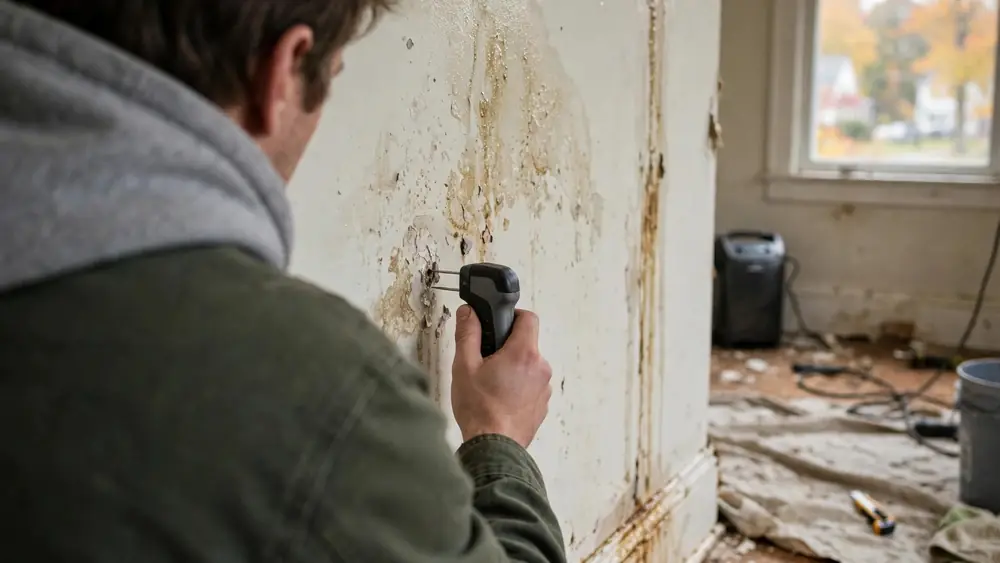
- Paint bubbling or baseboards pulling away
- A ceiling stain that grows after the leak was fixed
- Higher humidity on one floor than the others
What you can do while you wait
Shut off the water at the main, or the appliance valve, if it is safe to reach. Turn off power to the wet area only if you can reach the panel from a dry spot. Move small valuables, photograph everything, and stay out of any room with a sagging ceiling. Our first hour checklist covers this in order.
How crews decide what to save
Three questions drive most decisions. How contaminated is the water? How long has the material been wet? And can air reach it? Solid wood and tile usually survive, carpet pad usually does not, and drywall depends on the source and the time. Contents get the same treatment: anything valuable that can be cleaned is set aside, and the rest is listed for your claim before disposal.
Restoration or just cleanup?
Cleanup removes what you can see. Restoration deals with what you cannot: wet framing, damp insulation, moisture trapped under flooring, and contamination in porous materials. If a room looks fine but the drywall still reads wet, the job is not finished, whatever the surface suggests.
That difference matters most a few months later. Walls closed up while still damp tend to develop smells, stains and peeling paint, and the second repair is harder because the finishes are new. Ask for moisture readings before and after, and keep them with your home records.
Questions
Questions about water damage restoration
How long does water damage restoration take?
Drying alone commonly runs for several days, though the time depends on the materials and how long they were wet. Repairs are extra.
Can I dry a house out myself?
Small clean-water spills on hard surfaces, yes. Water inside walls or under floors needs meters and equipment, because surfaces can feel dry over wet framing.
Is a contractor required to follow a standard?
Rules vary by state. Ask whether the contractor follows the S500 and how they document dryness.[1]
Water Damage Restoration near you
Pick your area for notes on water damage restoration there.
- Anaheim
- Atlanta
- Cape Coral
- Cedar Hill
- Clearwater
- Colorado Springs
- Connecticut
- Dallas
- Delaware
- Dickinson
- Ellicott City
- Fort Lauderdale
- Fort Myers Beach
- Fort Myers
- Fort Worth
- Friendswood
- Houston
- Kansas
- Lake Stevens
- Las Vegas
- Louisiana
- Mamaroneck
- Miami
- New Hampshire
- Norcross
- Oregon
- Paterson
- Phoenix
- Port Charlotte
- Prosper
- Punta Gorda
- Riverside
- Salt Lake City
- San Antonio
- San Diego
- Sanibel
- Sarasota
- Seattle
- Venice
- West Palm Beach