
Key facts: Structural Drying
How drying actually works
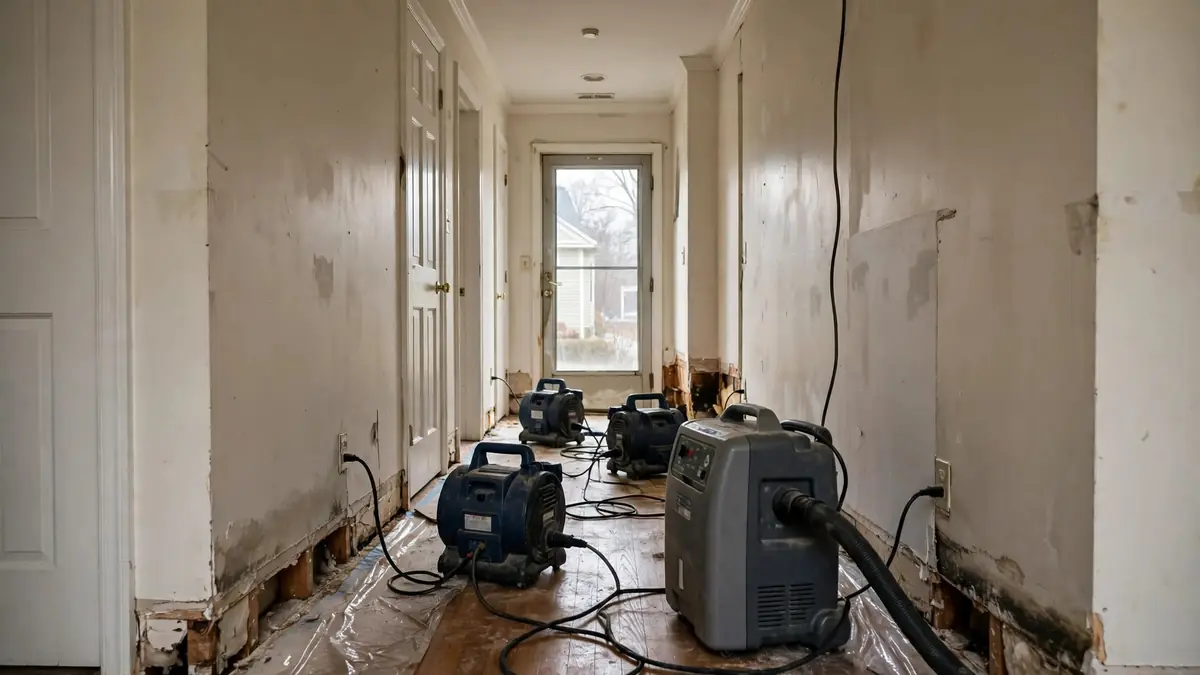
Water leaves materials by evaporation, so drying depends on three things: airflow over the surface, low humidity in the room, and a suitable temperature. Remove any one and the job stalls. That is why fans alone can make a closed room humid and damp.
Inside a drying job
- 1
Map moisture
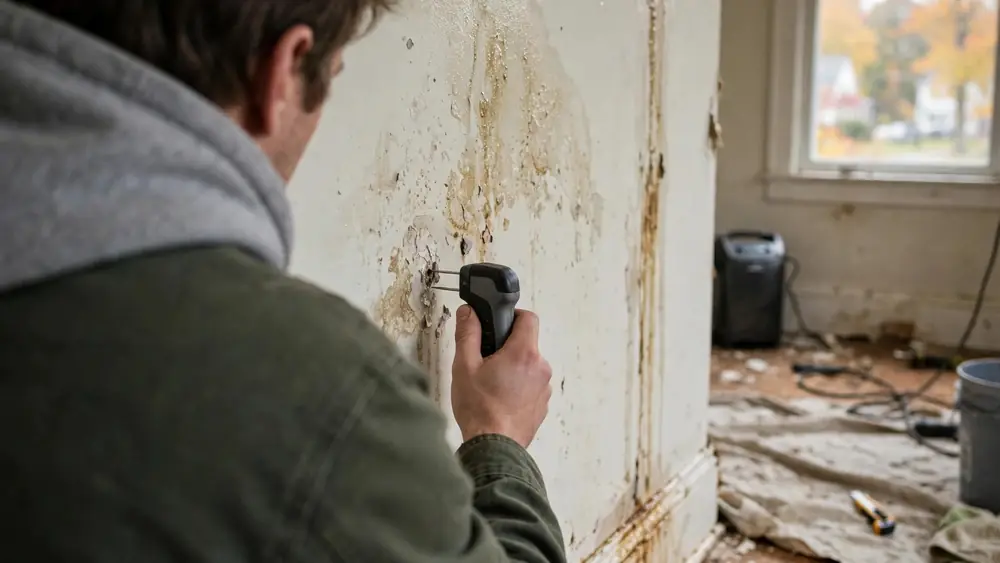
Meters and sometimes thermal cameras show the wet edge.
- 2
Open up where needed
Baseboards or small holes let air reach cavities.
- 3
Set equipment
Air movers go along walls, with dehumidifiers matched to the room.
- 4
Contain if needed
Plastic can focus drying on one area.
- 5
Monitor daily
Readings show whether drying is on track.
- 6
Remove equipment
It comes out only when materials reach their dry goal.
Structural Drying in practice
Materials that need extra care
- Hardwood floors, which may need drying mats
- Plaster on lath, which holds water for a long time
- Masonry and stone foundations
- Crawl spaces and attics
- Older finishes that may crack under fast drying
Keep the equipment running
It can be loud and warm, but turning machines off at night sets the job back. Ask for a daily log. Older homes need special thought, as lead paint and asbestos must be tested before opening walls.[2]
Why a room can feel dry and still be wet
Paint and wallpaper dry quickly and hide what is behind them. Framing, subfloors and the bottom plate of a wall can hold moisture for days after the surface feels normal. Pin and pinless meters compare those materials against a dry reference in the same house, giving a real target instead of a guess.
Dehumidifiers and air movers do different jobs
An air mover strips the moist layer from a surface, so water can keep evaporating. A dehumidifier then pulls that moisture out of the room and sends it down a drain. Neither works well alone, which is why you will see both in a properly set up room, with their numbers based on the size of the space and how wet it is.
Questions
Questions about structural drying
How many days does it take to dry a house?
Often around three to five days for a clean-water loss, though dense materials and humid weather take longer.
Why not just open the windows?
Outdoor air may be more humid than indoor air. Dehumidifiers control this.
Can I turn the air conditioning on?
Ask the contractor, as it depends on the system's condition and whether it got wet.
Structural Drying near you
Pick your area for notes on structural drying there.
- Anaheim
- Atlanta
- Cape Coral
- Cedar Hill
- Clearwater
- Colorado Springs
- Connecticut
- Dallas
- Delaware
- Dickinson
- Ellicott City
- Fort Lauderdale
- Fort Myers Beach
- Fort Myers
- Fort Worth
- Friendswood
- Houston
- Kansas
- Lake Stevens
- Las Vegas
- Louisiana
- Mamaroneck
- Miami
- New Hampshire
- Norcross
- Oregon
- Paterson
- Phoenix
- Port Charlotte
- Prosper
- Punta Gorda
- Riverside
- Salt Lake City
- San Antonio
- San Diego
- Sanibel
- Sarasota
- Seattle
- Venice
- West Palm Beach