
Key facts: Kansas
- The Great Flood of 1951 forced tens of thousands from their homes in Topeka and Kansas City.[1]
- Kansas water calls usually begin with the sky or the basement: hail and severe storms open roofs, while heavy rain tests sump pumps and old sewers.
- Levees and reservoirs came later, yet river bottoms still deserve a flood policy check.
The Kaw's long memory
The Great Flood of 1951 forced tens of thousands from their homes in Topeka and Kansas City.[1] Levees and reservoirs came later, yet river bottoms still deserve a flood policy check.
Suburban lower levels
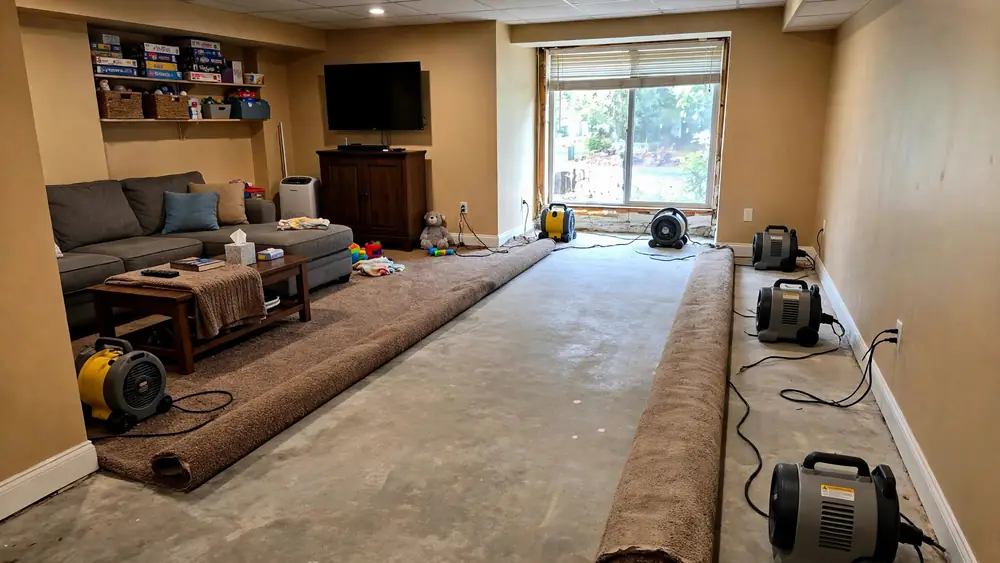
In Johnson County, finished basements and walkouts turn a failed pump into a major loss. Battery backups and alarms are worth having.
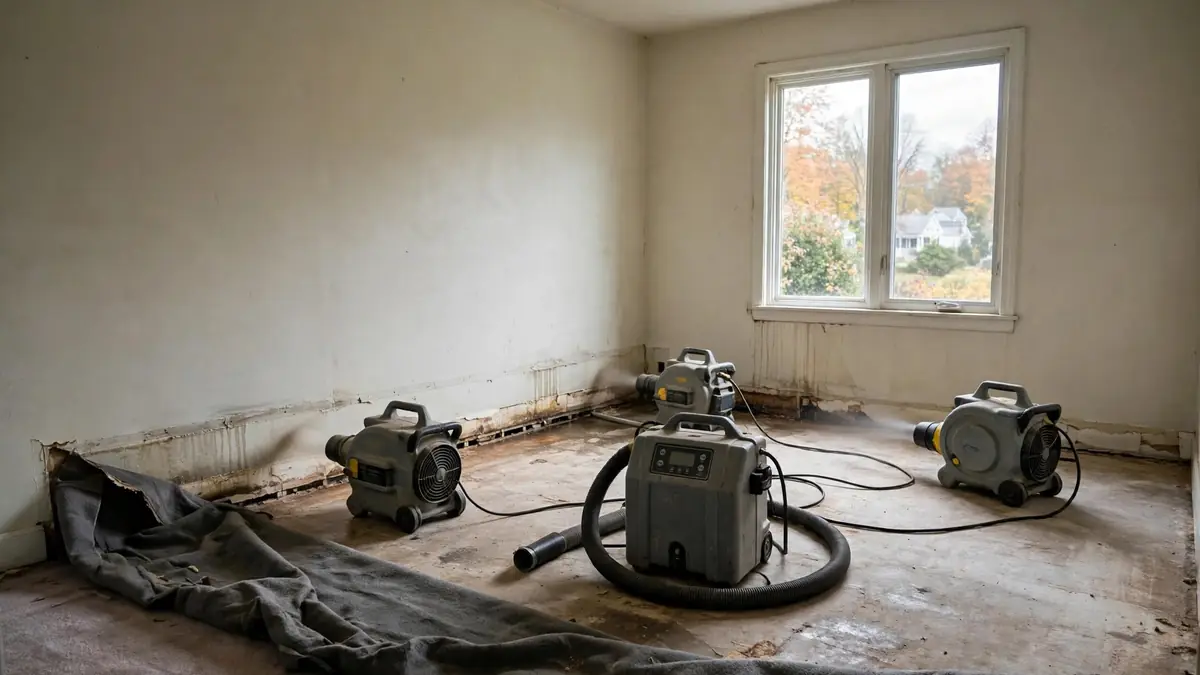
Inside a Kansas water loss
Cities we cover in Kansas
Each page covers what is different about water there.
Federal disasters declared in Kansas
FEMA lists 96 federal declarations for Kansas. The latest are Severe Storms, Straight-Line Winds, Tornadoes, and Flooding in 2011, Severe Storms, Straight-Line Winds, and Flooding in 2017 and Severe Winter Storm, Straight-Line Winds, Flooding, and Wildfires in 2025.
| Incident type | Declarations |
|---|---|
| Severe Storm | 50 |
| Fire | 14 |
| Flood | 13 |
| Tornado | 6 |
| Biological | 5 |
Counts unique disaster numbers in the FEMA declarations data.
Questions
Kansas water damage questions
Which parts of Kansas do you cover?
Coverage on file spans 202 ZIP codes, centered on Wichita, Topeka and the Kansas City suburbs.
Is it safe to stay in the house with a wet basement?
Often, if the electrics are dry and the water is clean. Ask the contractor on the call.