
Key facts: The First Hour
- Stop the source first.
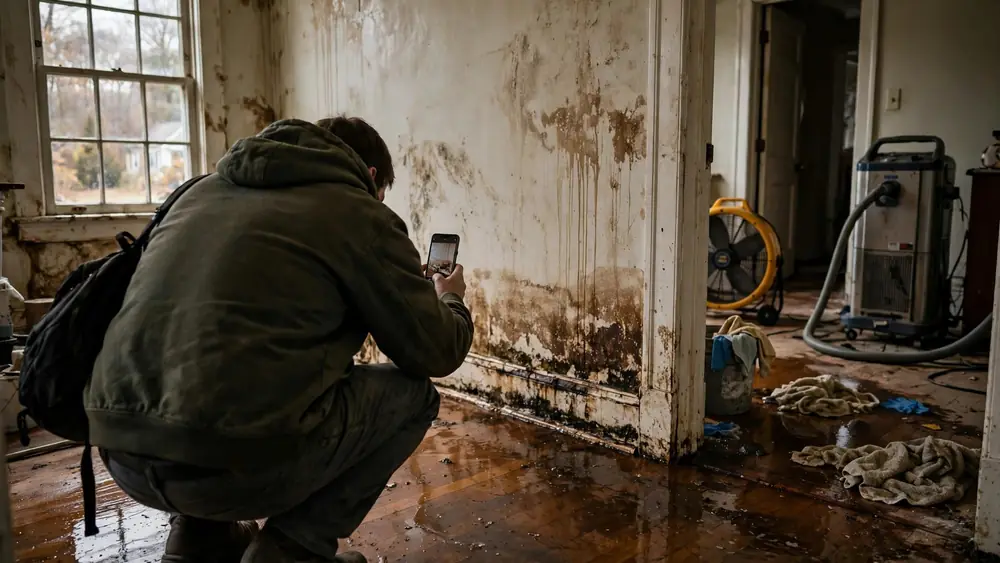
- Take photos before you move anything.
- The EPA's drying target is 24 to 48 hours.[1]
The order that works
- 1
Get safe
Avoid electricity and sagging ceilings.
- 2
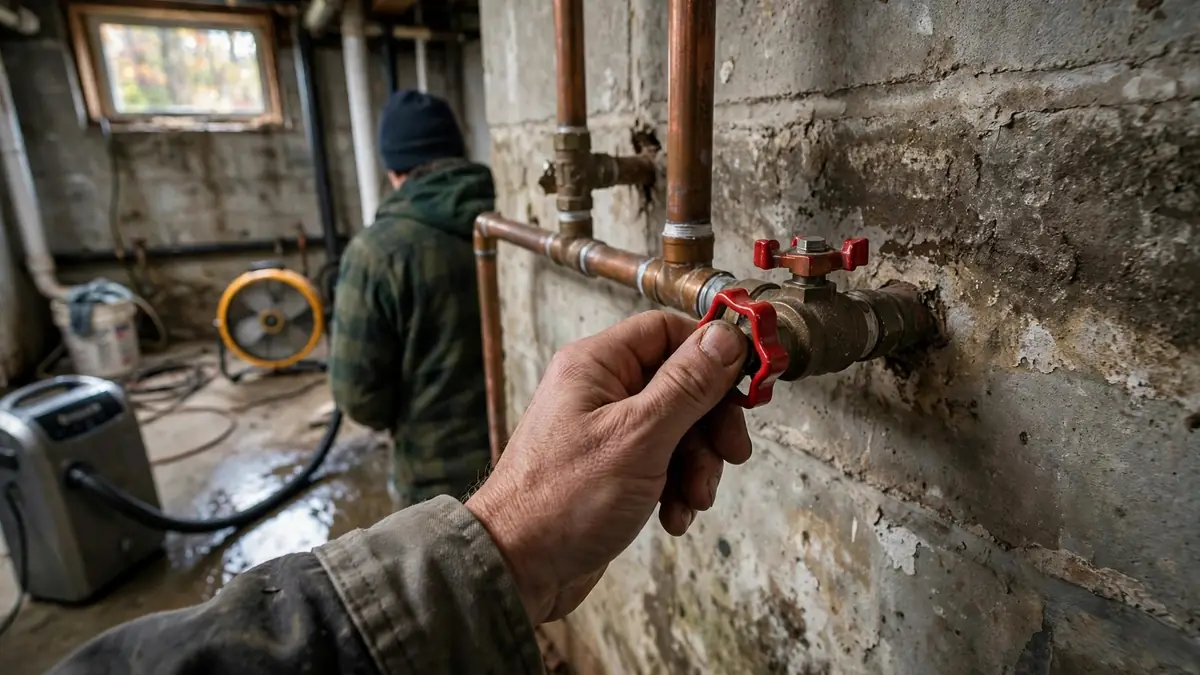
Stop the water
Use the main valve or appliance valve.
- 3
Cut power if safe
Only from a dry place.
- 4
Photograph
Wide shots first, then close-ups.
- 5
Lift and move
Put furniture on blocks, and move valuables.
- 6
Remove surface water
Mops and towels are fine for clean water.
- 7
Call
Get a contractor on the phone.
The First Hour: what to look for
Do not
- Use a household vacuum on water
- Turn on ceiling fans in wet ceilings
- Throw items away before documenting them
- Sign anything you do not understand
The notes that help later
Write down when you noticed the problem, what you saw and who you called. Keep these with your photos. A few lines made on the day are far more reliable than memory a month later, and they make insurance calls much simpler.
If you rent or live in a condo
Tell your landlord or building manager as soon as the water is under control, and do it in writing as well as by phone. They may control the shutoff, and they usually need to arrange work on the building. Your own insurance, if you have it, normally deals with your belongings. If the water came from a neighbor, let them know right away too, because they may not realize.
Questions
Questions about the first hour
What should I tell the contractor?
Say where the water came from, how long it has been there, how big an area is wet, and whether it is clean.