
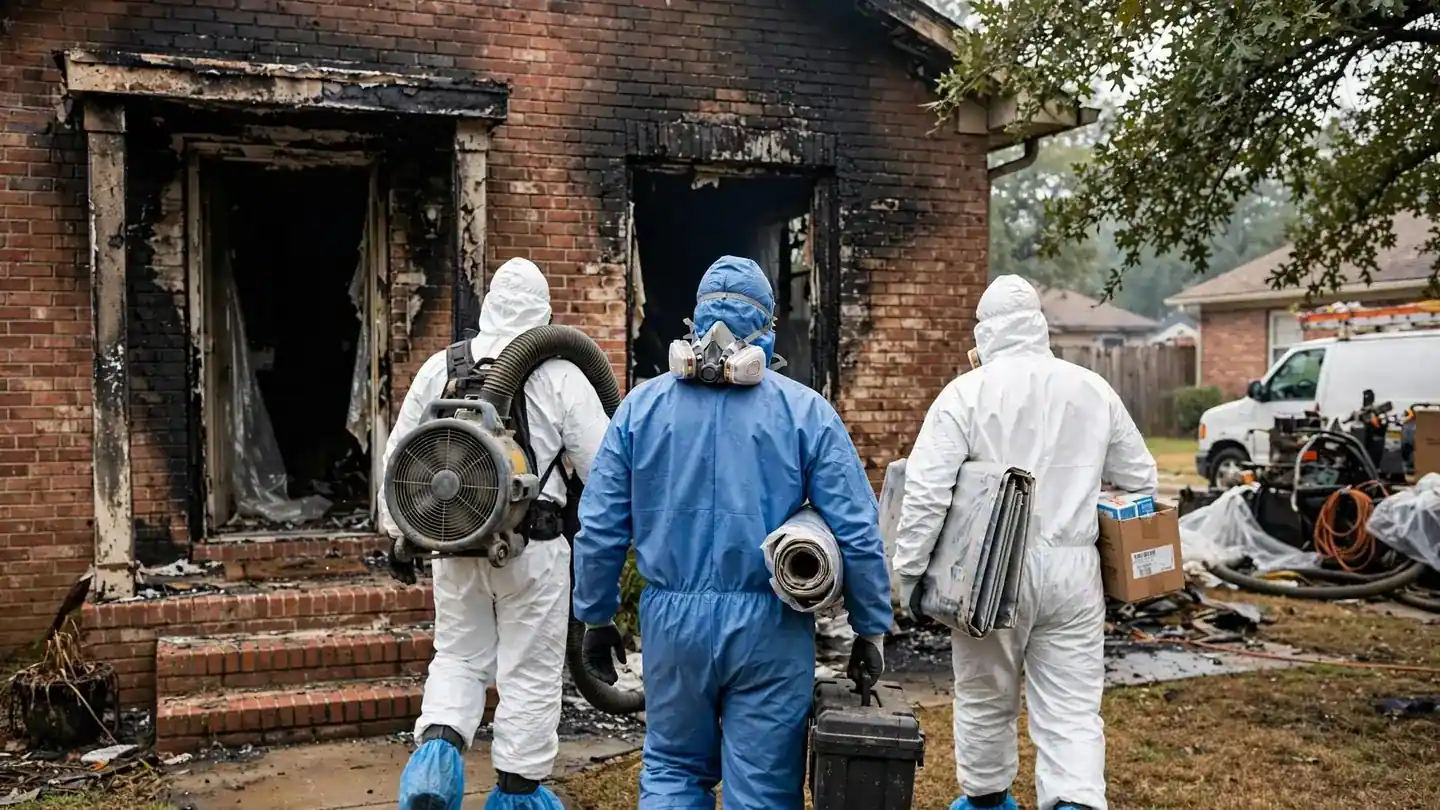
Key facts: Fire Damage Restoration
- Enter a burned home only after the fire department clears it.
- Soot is acidic, so early cleaning protects surfaces.
- Firefighting water needs extracting and drying as well.
The fire restoration sequence
- 1
Secure the property
Board-up and tarps protect against weather and entry.
- 2
Assess and document
Rooms, contents and systems are recorded for your claim.
- 3
Remove water and debris
Hose water comes out and ruined materials go.
- 4
Clean soot
Each surface gets the method that suits the residue.
- 5
Remove odor
Sources go first, then the air is treated.
- 6
Repair and rebuild
Framing, wiring and finishes are restored.
Why fire jobs differ from water jobs
A leak mainly threatens materials. A fire adds structural weakness, contaminated residues and hidden damage inside walls and ducts. Wiring and gas lines must be checked by qualified people before use, and older homes need testing for lead and asbestos before demolition. That's why the order of work matters so much.
What to tell the contractor
- What burned and where it started
- Whether the fire department has cleared the home
- Whether power and gas are on
- When the home was built
FAQ
Fire damage restoration questions
How soon can restoration begin?
Once officials clear the site. Securing the property often comes first.
Can I stay in the house?
Only if the fire department says so, and consider air quality and utilities.
Will insurance pay for restoration?
Fire is commonly covered by home policies, but read yours and report quickly.