
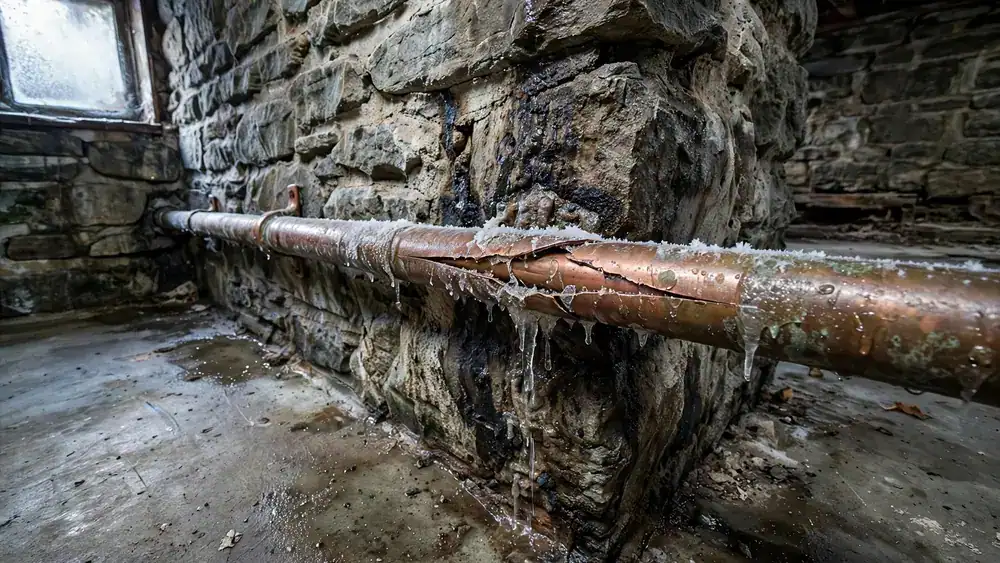
Key facts: Frozen Pipes
Safe thawing
- 1
Shut the main
Be ready if a split appears.
- 2
Open the faucet
Let melt water out.
- 3
Warm gently
A hair dryer or warm air is fine, while flame is not.
- 4
Restore slowly
Watch and listen for leaks.
Frozen Pipes: what to look for
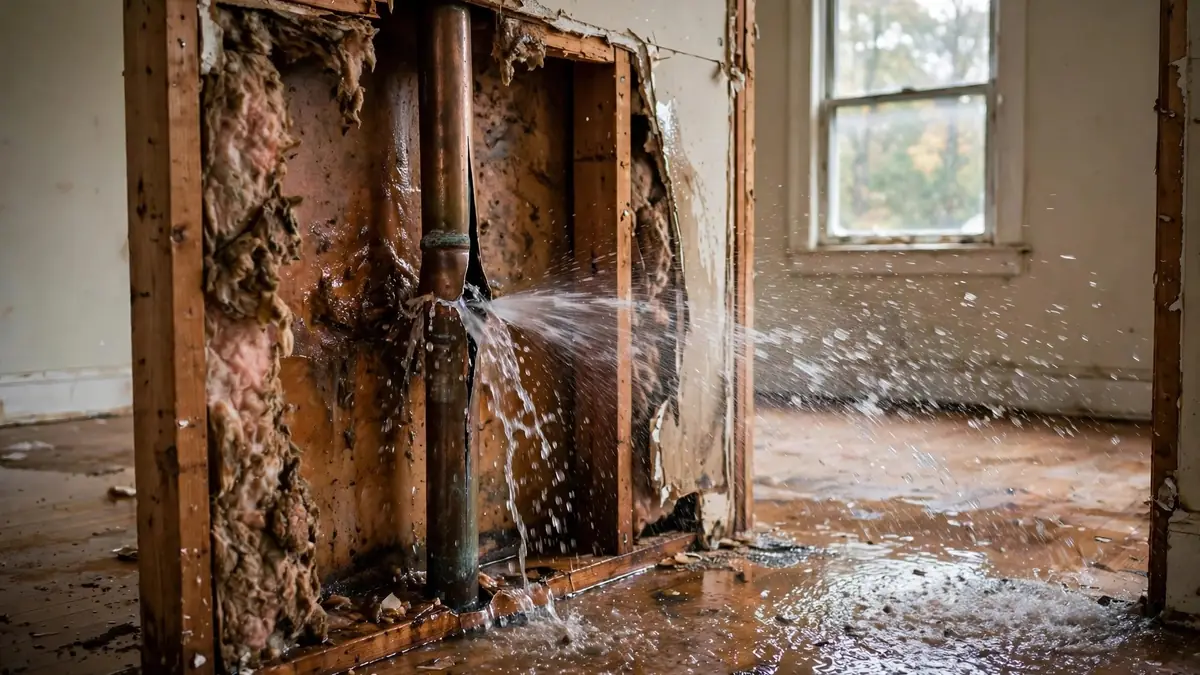
Places that freeze first
- Attics and crawl spaces
- Garages
- Exterior kitchen walls
- Hose bibs
Before the next cold snap
Insulate pipes in unheated spaces, disconnect hoses, and shut off outdoor faucets from inside where possible. Seal gaps where cold air gets in near pipes. If you are going away, keep the heat on and ask someone to check the house. In long absences, shutting the main and draining the lines is the safest option.
Signs a pipe has frozen
Low or no flow on a very cold morning is the classic sign, often at just one fixture. You might see frost on an exposed line or notice a strange smell from a drain. If a pipe is frozen in a wall you cannot reach, call a plumber instead of trying to heat the wall, and turn up the heat in that room.
Questions
Questions about frozen pipes
Will every frozen pipe burst?
No, but the risk is real. Check every run once the water is back.