
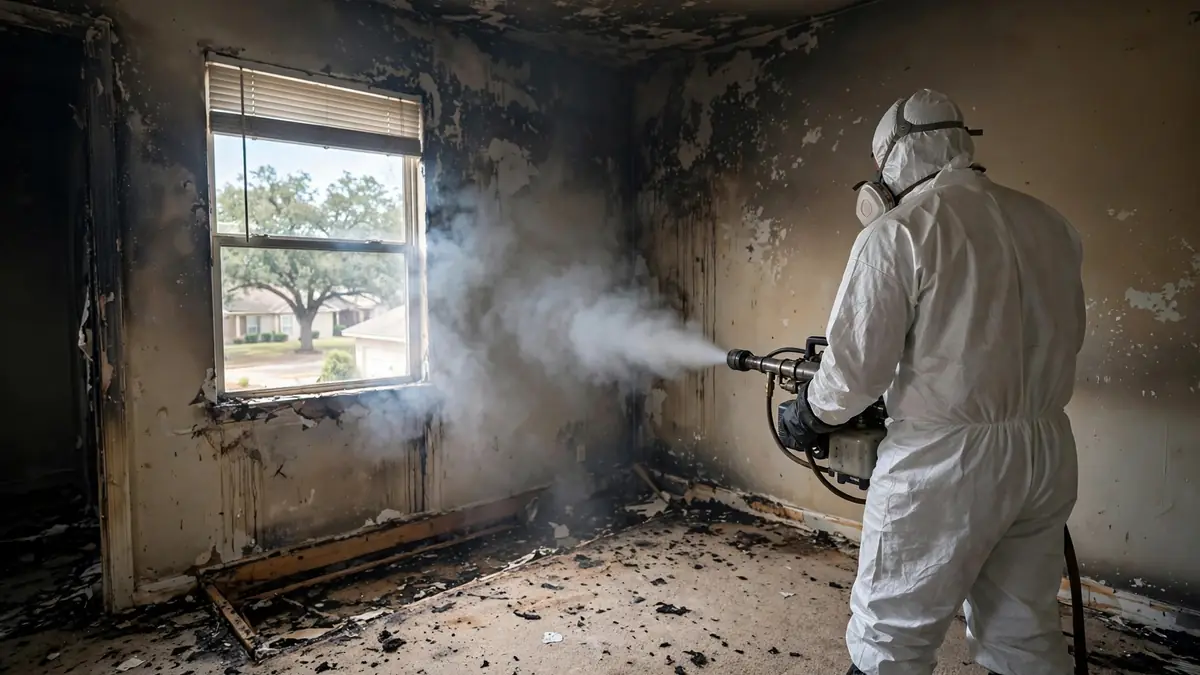
Key facts: Smoke and Soot Cleanup
- Dry smoke, wet smoke and protein residues clean differently.
- Don't run the HVAC before it's checked.
- Odor treatment comes after cleaning, not before.
Types of residue
- Dry sootPowdery residue from fast, hot fires, which smears easily.
- Wet sootSticky residue from slow, smoldering fires.
- Protein residueA thin film from kitchen fires with a strong smell.
Why wiping can make it worse
Wet rags can drive soot into paint and leave grey streaks. Professionals often start with dry sponges, then move to cleaners. Soft goods such as curtains and clothes may need specialist cleaning, and heavily affected insulation usually goes.
Removing smoke odor
- 1
Remove the source
Burned materials and soot go first.
- 2
Clean surfaces
Walls, ceilings, cabinets and ducts.
- 3
Treat the air
Equipment is used to neutralize what's left.
- 4
Seal if needed
Sealers lock in any remaining odor on framing.
FAQ
Smoke damage questions
Can smoke smell be permanently removed?
Usually, if sources are removed before the air is treated.
Is soot harmful?
It can irritate lungs, so limit exposure and wear protection.
Do I need duct cleaning?
If smoke reached the system, it's usually wise to have it inspected.