
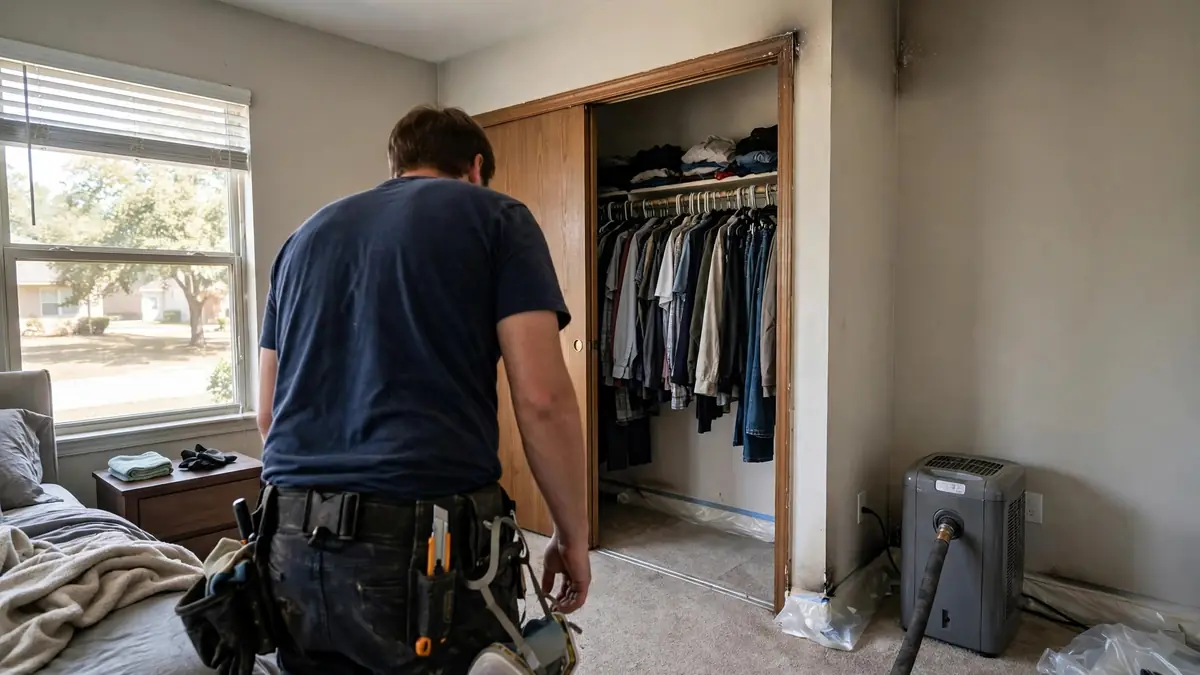
Key facts: Remove Smoke Smell
- Odor comes from residue, so remove that first.
- Replace HVAC filters after smoke exposure.
- Attic insulation can hold smell.
Why the smell stays
Smoke particles are tiny and oily, and they settle on walls, ceilings, inside cabinets and in fabrics. Insulation and duct lining absorb them, and warm days can bring the odor back. That's why a house can smell fine one morning and strong by afternoon.
Remove Smoke Smell at a glance
What you can safely do
- 1
Get clearance first
Only enter when officials say it's safe.
- 2
Air out if safe
Open windows when outdoor air is clean.
- 3
Change filters
Replace HVAC filters, and keep the system off until checked.
- 4
Launder what's lightly affected
Wash fabrics with light smoke exposure.
- 5
Bag heavily sooted items
Keep them for your adjuster.
When professionals are needed
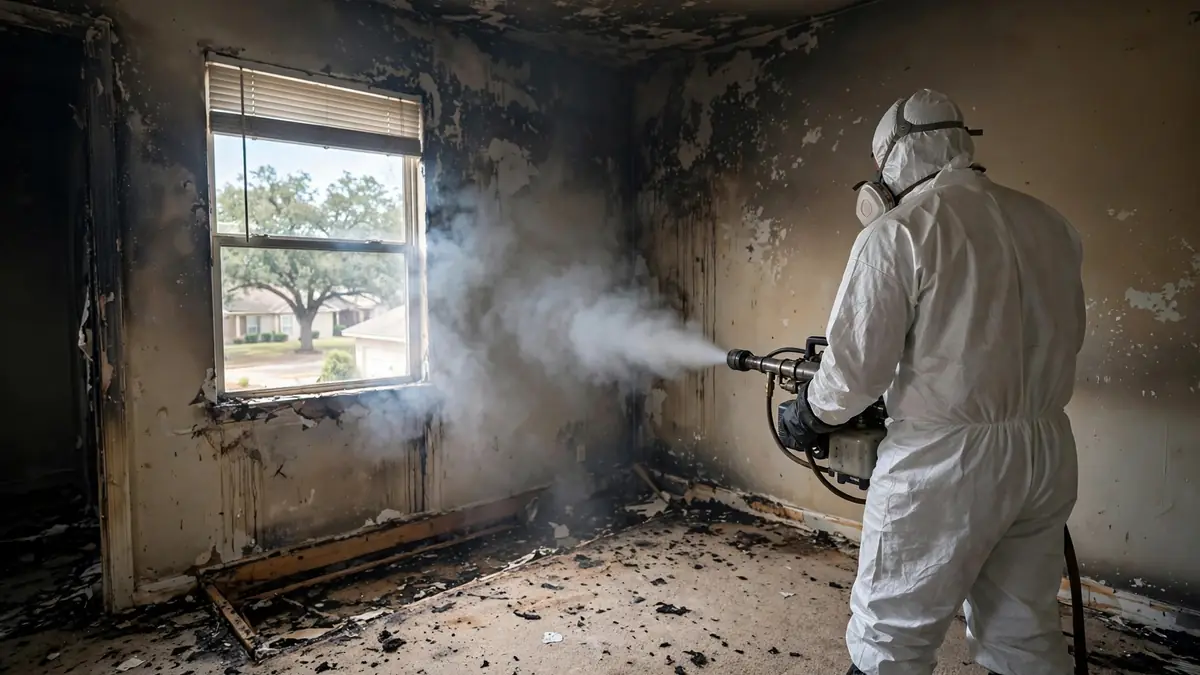
Burned materials, soot on ceilings, and smell inside ducts or attics need proper methods. Crews remove what's ruined, clean surfaces, then use equipment to treat what remains, sealing framing if needed. Ozone and similar machines shouldn't be run in occupied spaces, so leave them to trained people. See smoke and soot cleanup.
FAQ
Smoke smell questions
Does vinegar remove smoke smell?
It may lessen light odors on surfaces, but won't fix embedded residue.
How long does the smell last?
Without source removal it can return for months.