
Key facts: Port Charlotte
- Hurricane Charley's eyewall struck Port Charlotte and Punta Gorda on August 13, 2004, and Ian's second landfall came near Punta Gorda in 2022.[1][2]
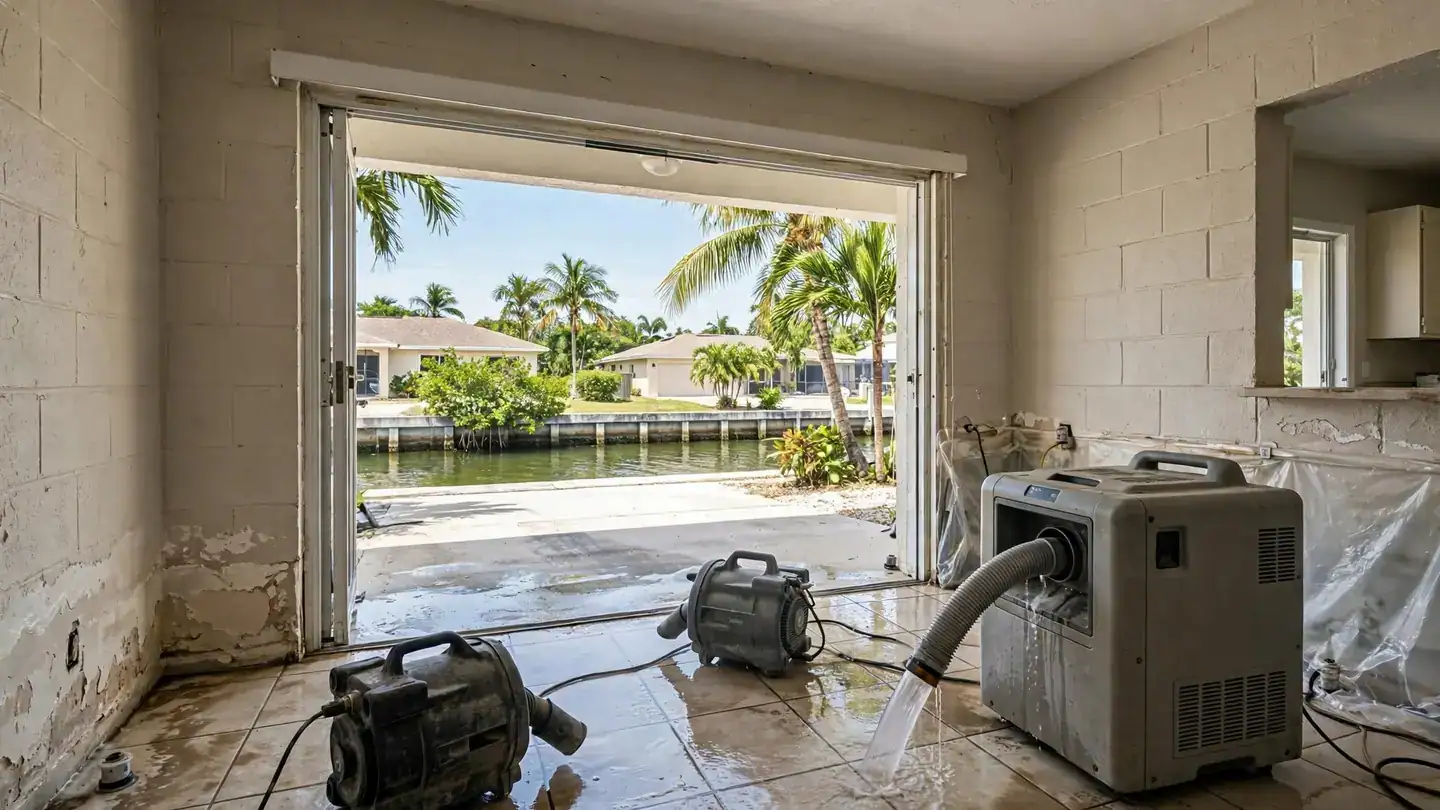
- In a humid county, drying wet items inside the EPA's 24 to 48 hour window takes real equipment.[4]
- On this side of the harbor, wind has done as much harm as water.
Wind opened the roofs
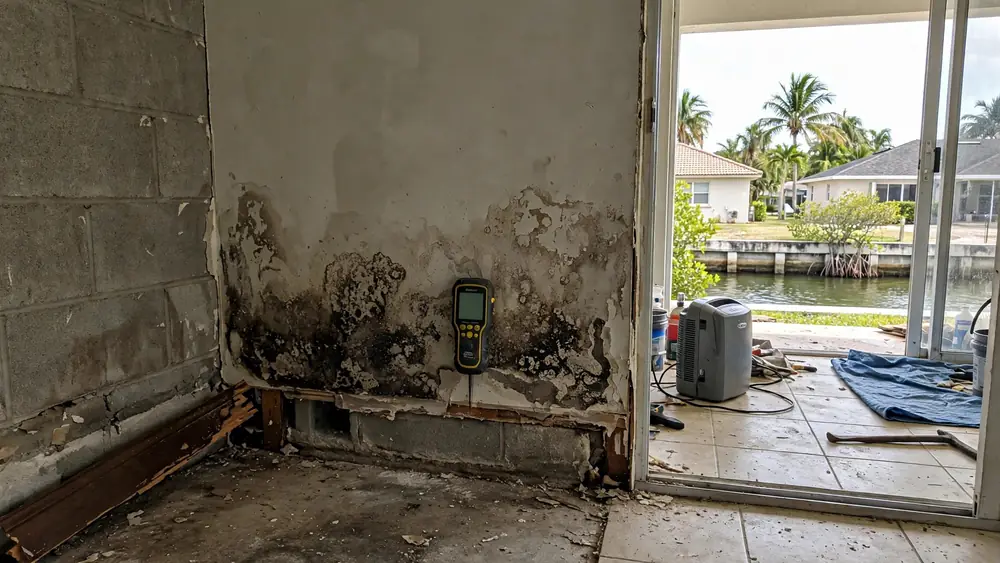
During Ian, most surge sensors in Port Charlotte stayed dry because of offshore winds, so roofs opened by wind, and the rain that followed, drove much of the damage.[2] Even small lifted shingles count. Look for stains, wet insulation and damaged soffits after any storm.
A closer look in Port Charlotte
Don't let the claim clock run out
Flood claims recorded in Charlotte County
Port Charlotte sits in Charlotte County. FEMA publishes every National Flood Insurance Program claim with personal details removed, which gives a plain record of where water has reached insured buildings here.
| Measure | Count |
|---|---|
| Flood insurance claims on record | 11,697 |
| Year with the most claims | 2024 (6,250) |
| Largest named event | Hurricane Milton (3,511) |
| Claims outside high-risk A and V zones | 4% |
| Claims on buildings built before 1975 | 55% |
County-wide counts of insured claims only. Uninsured losses, burst pipes and appliance leaks are not in this data.
What the Port Charlotte claim record shows
For Port Charlotte homes, the local precedents are the events behind the most Charlotte County claims: Hurricane Milton (3,511 claims), Hurricane Helene (2,670 claims) and Hurricane Ian (2,160 claims).
Around Port Charlotte, about 96% of county claims with a recorded zone came from the high-risk A and V zones, so checking your address on the FEMA flood map tells you a lot here.
If your Port Charlotte home is older, note that buildings from before 1975 make up 55% of county claims with a known build date. Many predate current flood maps, so inspect low outlets, ductwork and subfloors closely after any water event.
Federal disaster history for Charlotte County
FEMA lists 42 federal declarations covering Charlotte County. The most common types are hurricane (19), tropical storm (5) and severe storm (5). The latest are Hurricane Milton in 2024, Hurricane Helene in 2024 and Tropical Storm Helene in 2024. When a declaration is open, federal aid may be available to Port Charlotte residents, so ask about it alongside your insurance claim.
Port Charlotte weather and your home
Weather records for Port Charlotte from 2015 through 2024 average 54 inches of precipitation a year, and August and September are the wettest months. The area averages 7.3 days a year with an inch or more.
Freezing nights almost never happen in Port Charlotte, so the bigger concerns are storms, plumbing failures and humidity.
When rain falls in Port Charlotte
Seasonal averages for Port Charlotte, 2015 through 2024. Plan roof, gutter and sump pump checks before the wettest stretch.
| Season | Average | Share of year |
|---|---|---|
| January to March | 6.2 in | 12% |
| April to June | 15.1 in | 28% |
| July to September | 25.2 in | 47% |
| October to December | 7.3 in | 13% |
Modeled from Open-Meteo historical weather data. Precipitation includes rain and melted snow.
Port Charlotte home checklist from these records
- Treat flood risk as current. 76% of Charlotte County claims date from 2015 or later.
- Check roof flashing and drains before August, the wettest month in Port Charlotte.
- Keep dated photos of each room. After Hurricane Milton, 3,511 insured Charlotte County owners filed claims at about the same time.
What to tell the Port Charlotte contractor
- Whether the roof is damaged
- Whether AC drains overflowed
- Your evacuation zone, if applicable
Services Port Charlotte callers ask about
Questions
Port Charlotte water damage questions
When should I file a Florida claim?
As soon as you can. Statute 627.70132 sets time limits, so check the current text.[3]
Does flood insurance cover wind?
No. Wind usually falls to a home or wind policy, and flood to a flood policy.
Sources and citations
- [1]National Hurricane Center: Hurricane Charley report
- [2]National Hurricane Center: Hurricane Ian report
- [3]Florida Statutes 627.70132
- [4]U.S. EPA: A brief guide to mold, moisture and your home
- [5]OpenFEMA: FIMA NFIP redacted claims
- [6]OpenFEMA: Disaster declarations summaries
- [7]Open-Meteo: Historical weather API