
Key facts: Portland
Basements finished after the fact
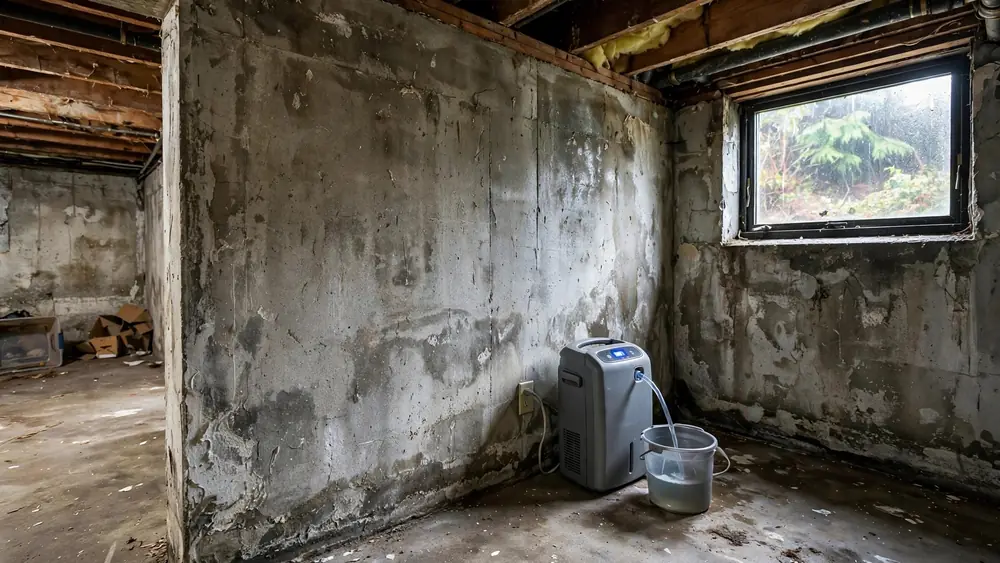
Inner neighborhoods are full of early 1900s bungalows and foursquares. Their basements were often built as storage with no waterproofing, then finished decades later. So carpet and framing now sit against walls that were never meant to keep water out. Check low on walls, under stairs and behind stored boxes.
A closer look in Portland
Sewer trouble and big events
Flood claims recorded in Multnomah County
Portland sits in Multnomah County. FEMA publishes every National Flood Insurance Program claim with personal details removed, which gives a plain record of where water has reached insured buildings here.
| Measure | Count |
|---|---|
| Flood insurance claims on record | 348 |
| Year with the most claims | 1996 (132) |
| Largest named event | Flooding (132) |
| Claims outside high-risk A and V zones | 48% |
| Claims on buildings built before 1975 | 76% |
County-wide counts of insured claims only. Uninsured losses, burst pipes and appliance leaks are not in this data.
What the Portland claim record shows
For Portland homes, the local precedents are the events behind the most Multnomah County claims: Flooding (132 claims) and Winter Storm (22 claims).
About 48% of claims with a recorded zone came from outside the high-risk A and V zones, so a moderate-risk label does not mean a Portland home stays dry.
If your Portland home is older, note that buildings from before 1975 make up 76% of county claims with a known build date. Many predate current flood maps, so inspect low outlets, ductwork and subfloors closely after any water event.
Federal disaster history for Multnomah County
FEMA lists 12 federal declarations covering Multnomah County. The most common types are severe storm (4), flood (3) and fire (2). The latest are Severe Winter Storms, Straight-Line Winds, Landslides, and Mudslides in 2024, Wildfires and Straight-Line Winds in 2020 and Covid-19 Pandemic in 2020. Federal aid can open after a declaration, so Portland owners should look it up before discarding damaged items.
Portland weather and your home
Weather records for Portland from 2015 through 2024 average 53 inches of precipitation a year, and December and November are the wettest months. The area averages 8.0 days a year with an inch or more.
Frost reaches Portland on about 33 nights a year, but hard freezes are less common, which can leave pipes in attics and outer walls poorly protected in a cold snap.
When rain falls in Portland
Seasonal averages for Portland, 2015 through 2024. Plan roof, gutter and sump pump checks before the wettest stretch.
| Season | Average | Share of year |
|---|---|---|
| January to March | 18.8 in | 35% |
| April to June | 9.5 in | 18% |
| July to September | 3.3 in | 6% |
| October to December | 21.8 in | 41% |
Modeled from Open-Meteo historical weather data. Precipitation includes rain and melted snow.
Portland home checklist from these records
- Don't rely on recent quiet years. Only 15% of Multnomah County claims date from 2015 or later, so older floods still show what can happen.
- Check roof flashing and drains before December, the wettest month in Portland.
- Keep dated photos of each room. After Flooding, 132 insured Multnomah County owners filed claims at about the same time.
What to tell the Portland contractor
- Whether the water is seepage or a backup
- Whether the basement is finished
- Your neighborhood
Services Portland callers ask about
Questions