
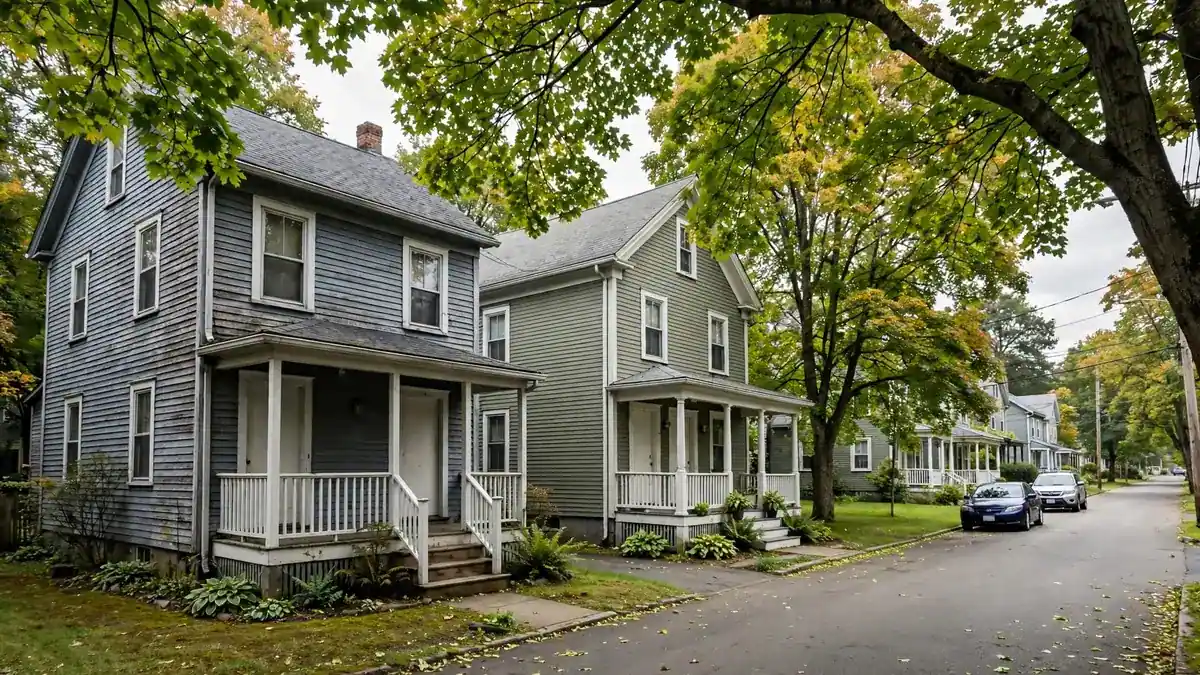
Key facts: New Haven
- The city covers only about 17 square miles, so much post-1950 building went to neighboring towns and the older stock stayed.[1]
- The 1938 hurricane, Carol and Gloria all hit this area, so low streets near the water deserve a flood policy check before storm season.
- New Haven's housing is mostly old, and that matters more than almost anything else on a water call.
Plaster ceilings: dry it or take it down?
Wet plaster on wood lath stains and softens but often holds together and can dry where it is.[5] A sagging ceiling is another matter, because the keys holding it to the lath may have failed. Stay out from under it. Tap nearby areas: a hollow sound suggests the bond has let go.
A closer look in New Haven
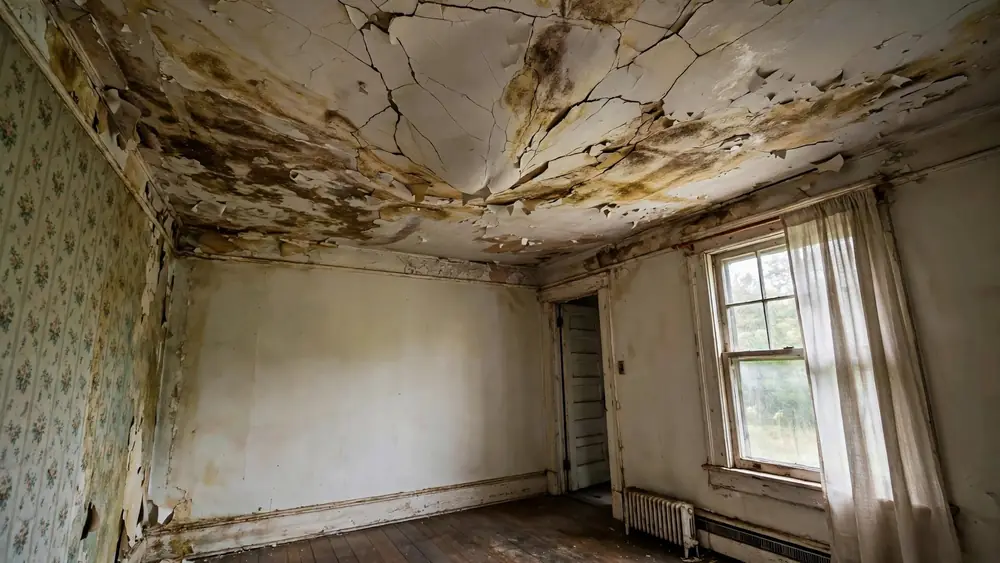
Test before anyone cuts
Harbor and Quinnipiac exposure
Flood claims recorded in New Haven County
New Haven sits in New Haven County. FEMA publishes every National Flood Insurance Program claim with personal details removed, which gives a plain record of where water has reached insured buildings here.
| Measure | Count |
|---|---|
| Flood insurance claims on record | 9,609 |
| Year with the most claims | 2011 (1,861) |
| Largest named event | Hurricane Sandy (1,779) |
| Claims outside high-risk A and V zones | 22% |
| Claims on buildings built before 1975 | 81% |
County-wide counts of insured claims only. Uninsured losses, burst pipes and appliance leaks are not in this data.
What the New Haven claim record shows
For New Haven homes, the local precedents are the events behind the most New Haven County claims: Hurricane Sandy (1,779 claims), Hurricane Irene (1,644 claims) and Not A Named Storm (1,057 claims).
Around New Haven, about 78% of county claims with a recorded zone came from the high-risk A and V zones, so checking your address on the FEMA flood map tells you a lot here.
If your New Haven home is older, note that buildings from before 1975 make up 81% of county claims with a known build date. Many predate current flood maps, so inspect low outlets, ductwork and subfloors closely after any water event.
Federal disaster history for New Haven County
FEMA lists 36 federal declarations covering New Haven County. The most common types are hurricane (11), severe storm (9) and snowstorm (8). The latest are Hawthorne Fire in 2024, Severe Storm, Flooding, Landslides, and Mudslides in 2024 and Severe Storms, Flooding, Landslides, and Mudslides in 2024. When a declaration is open, federal aid may be available to New Haven residents, so ask about it alongside your insurance claim.
New Haven weather and your home
Weather records for New Haven from 2015 through 2024 average 52 inches of precipitation a year, and December and April are the wettest months. The area averages 11.7 days a year with an inch or more.
New Haven falls to 20°F or below on about 20 nights a year, which puts pipes in exterior walls, crawl spaces and garages at risk.
When rain falls in New Haven
Seasonal averages for New Haven, 2015 through 2024. Plan roof, gutter and sump pump checks before the wettest stretch.
| Season | Average | Share of year |
|---|---|---|
| January to March | 12.6 in | 24% |
| April to June | 12.2 in | 24% |
| July to September | 13.6 in | 26% |
| October to December | 13.3 in | 26% |
Modeled from Open-Meteo historical weather data. Precipitation includes rain and melted snow.
New Haven home checklist from these records
- Don't rely on recent quiet years. Only 4% of New Haven County claims date from 2015 or later, so older floods still show what can happen.
- Insulate exposed pipes before 20-plus hard-freeze nights arrive, and know your main shutoff.
- Test any sump pump before December, since New Haven averages 12 days a year with an inch or more.
- Keep dated photos of each room. After Hurricane Sandy, 1,779 insured New Haven County owners filed claims at about the same time.
What to tell the New Haven contractor
- The age of the building, if you know it
- Whether the wall or ceiling is plaster or drywall
- Whether any ceiling is sagging
Services New Haven callers ask about
Questions
New Haven water damage questions
Can wet plaster in a New Haven home be saved?
Often, yes, if it is still bonded to the lath. Sagging, bulging or hollow-sounding sections usually need removal.
Should I worry about lead after a leak?
In a pre-1978 building, assume lead paint may be present until tested, and keep children away from peeling or cut surfaces.[3]
Sources and citations
- [1]Wikipedia: New Haven, Connecticut
- [2]Wikipedia: Quinnipiac River
- [3]U.S. EPA: Protect your family from sources of lead
- [4]U.S. EPA: Protect your family from asbestos
- [5]Wikipedia: Lath and plaster
- [6]OpenFEMA: FIMA NFIP redacted claims
- [7]OpenFEMA: Disaster declarations summaries
- [8]Open-Meteo: Historical weather API