
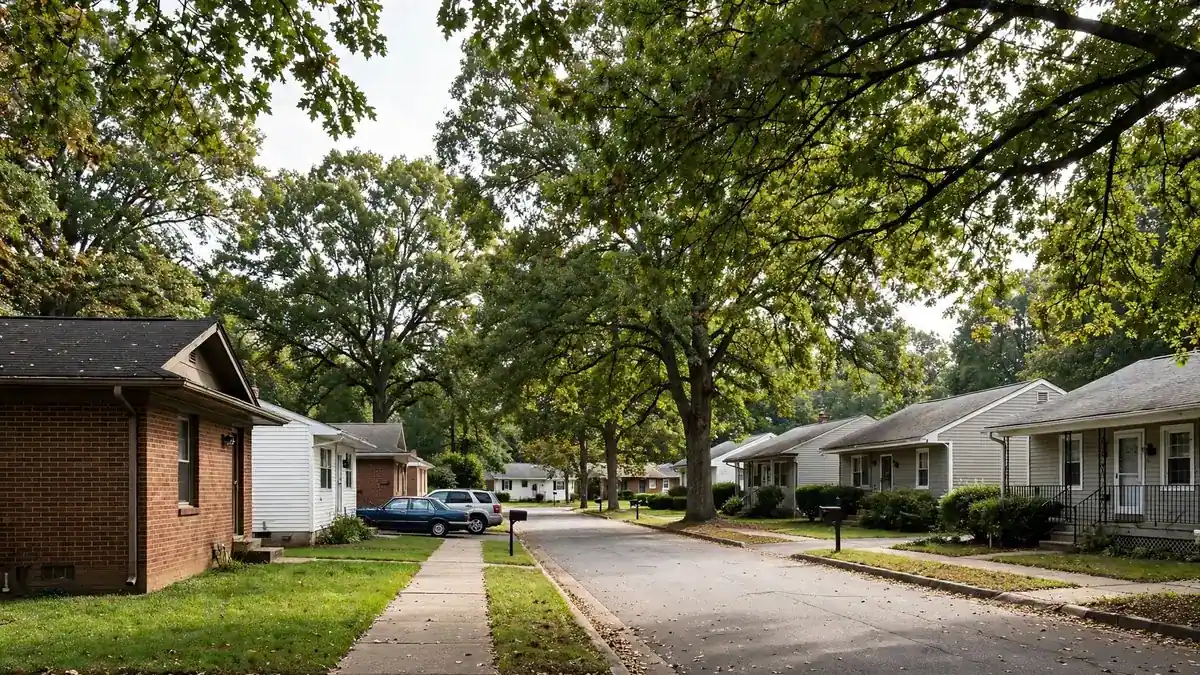
Key facts: Claymont
- Claymont began along Naamans Creek where it empties into the Delaware River, and grew around an 1838 rail station with later steel and chemical industry nearby.[1]
- Its 9,895 residents live in a mix of older streets and mid-century blocks.
- Older homes close to former industrial land deserve the same care as any pre-1978 house: assume lead paint until tested.
Check for old industry before you dig or demolish
Older homes close to former industrial land deserve the same care as any pre-1978 house: assume lead paint until tested. If floodwater came up from outside, treat what it left as contaminated, and do not sweep or blow dried silt indoors.
A closer look in Claymont
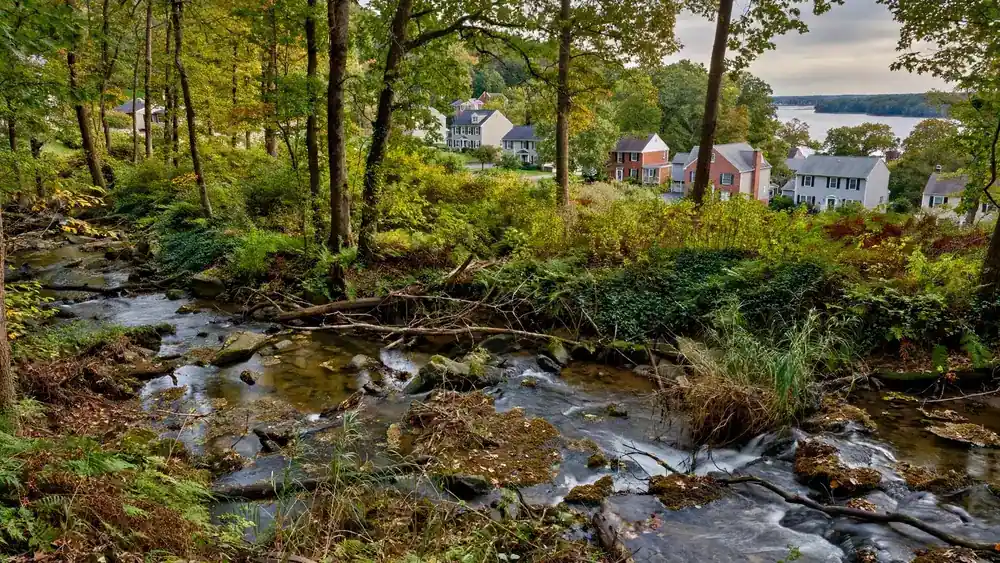
Winter storms at the state's northern tip
Flood claims recorded in New Castle County
Claymont sits in New Castle County. FEMA publishes every National Flood Insurance Program claim with personal details removed, which gives a plain record of where water has reached insured buildings here.
| Measure | Count |
|---|---|
| Flood insurance claims on record | 1,575 |
| Year with the most claims | 2003 (263) |
| Largest named event | Hurricane Floyd (210) |
| Claims outside high-risk A and V zones | 32% |
| Claims on buildings built before 1975 | 80% |
County-wide counts of insured claims only. Uninsured losses, burst pipes and appliance leaks are not in this data.
What the Claymont claim record shows
For Claymont homes, the local precedents are the events behind the most New Castle County claims: Hurricane Floyd (210 claims), Hurricane Irene (144 claims) and Hurricane Ida (90 claims).
About 32% of claims with a recorded zone came from outside the high-risk A and V zones, so a moderate-risk label does not mean a Claymont home stays dry.
If your Claymont home is older, note that buildings from before 1975 make up 80% of county claims with a known build date. Many predate current flood maps, so inspect low outlets, ductwork and subfloors closely after any water event.
Federal disaster history for New Castle County
FEMA lists 17 federal declarations covering New Castle County. The most common types are hurricane (9), snowstorm (4) and biological (2). The latest are Remnants of Hurricane Ida in 2021, Tropical Storm Isaias in 2020 and Covid-19 Pandemic in 2020. If your loss falls inside an open declaration, Claymont homeowners can check DisasterAssistance.gov as well as their insurance policy.
Claymont weather and your home
Weather records for Claymont from 2015 through 2024 average 52 inches of precipitation a year, and August and July are the wettest months. The area averages 10.7 days a year with an inch or more.
Claymont falls to 20°F or below on about 15 nights a year, which puts pipes in exterior walls, crawl spaces and garages at risk.
When rain falls in Claymont
Seasonal averages for Claymont, 2015 through 2024. Plan roof, gutter and sump pump checks before the wettest stretch.
| Season | Average | Share of year |
|---|---|---|
| January to March | 11.5 in | 22% |
| April to June | 13.5 in | 26% |
| July to September | 15.5 in | 30% |
| October to December | 11.3 in | 22% |
Modeled from Open-Meteo historical weather data. Precipitation includes rain and melted snow.
Claymont home checklist from these records
- Don't rely on recent quiet years. Only 15% of New Castle County claims date from 2015 or later, so older floods still show what can happen.
- Insulate exposed pipes before 15-plus hard-freeze nights arrive, and know your main shutoff.
- Test any sump pump before August, since Claymont averages 11 days a year with an inch or more.
- Keep dated photos of each room. After Hurricane Floyd, 210 insured New Castle County owners filed claims at about the same time.
What to tell the Claymont contractor
- Distance from Naamans Creek
- Whether power is out
- Whether a basement or first floor is affected
Services Claymont callers ask about
Questions
Claymont water damage questions
Should I walk through floodwater to reach my home?
No. Ready.gov says never walk or drive through it.[2] Wait until authorities say it is safe.
How do I check flood risk in Claymont?
Delaware's DNREC offers an online flood planning tool that is a good place to start.