
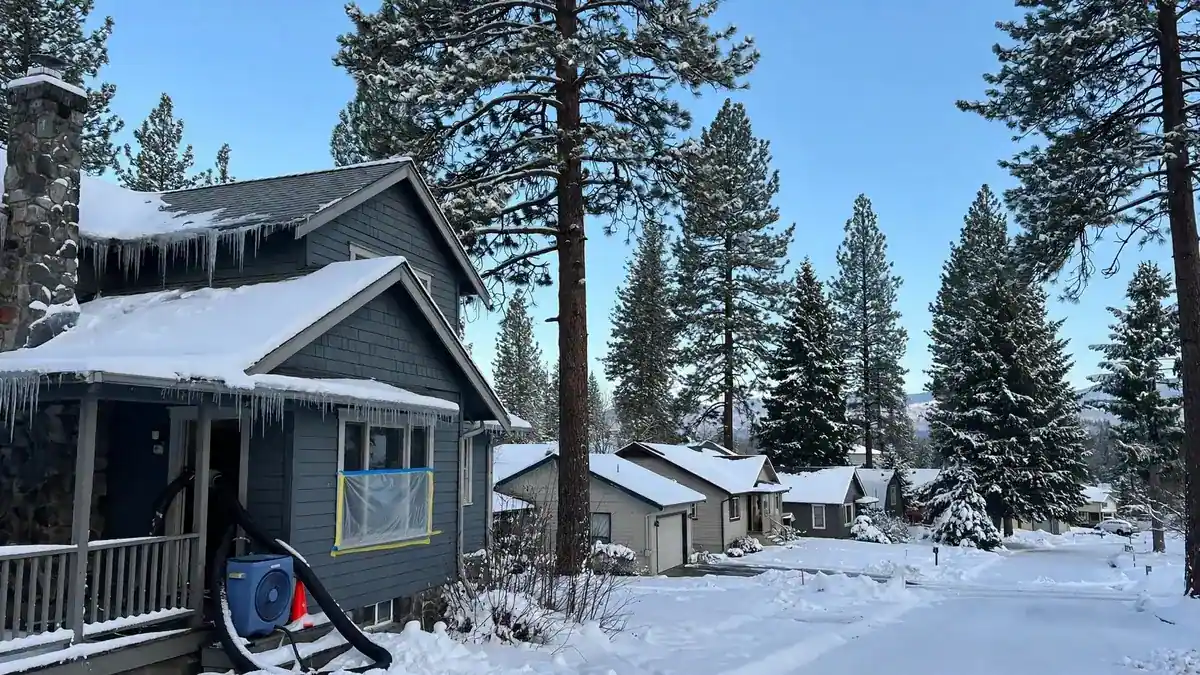
Key facts: Bend
- Bend gets only about 10.6 inches of precipitation a year,[1] so most water damage here has nothing to do with rain.
- Winter nights typically fall between −5 and −10°F, with a record of −26.[1]
- At about 3,600 feet, homes are generally built for it, but pipes still freeze in predictable places: garages, outside walls, crawl spaces with gaps in insulation, and hose bibs.
Where pipes freeze in Central Oregon
Winter nights typically fall between −5 and −10°F, with a record of −26.[1] At about 3,600 feet, homes are generally built for it, but pipes still freeze in predictable places: garages, outside walls, crawl spaces with gaps in insulation, and hose bibs. Ready.gov suggests letting faucets drip and opening cabinet doors in extreme cold.[2]
A closer look in Bend
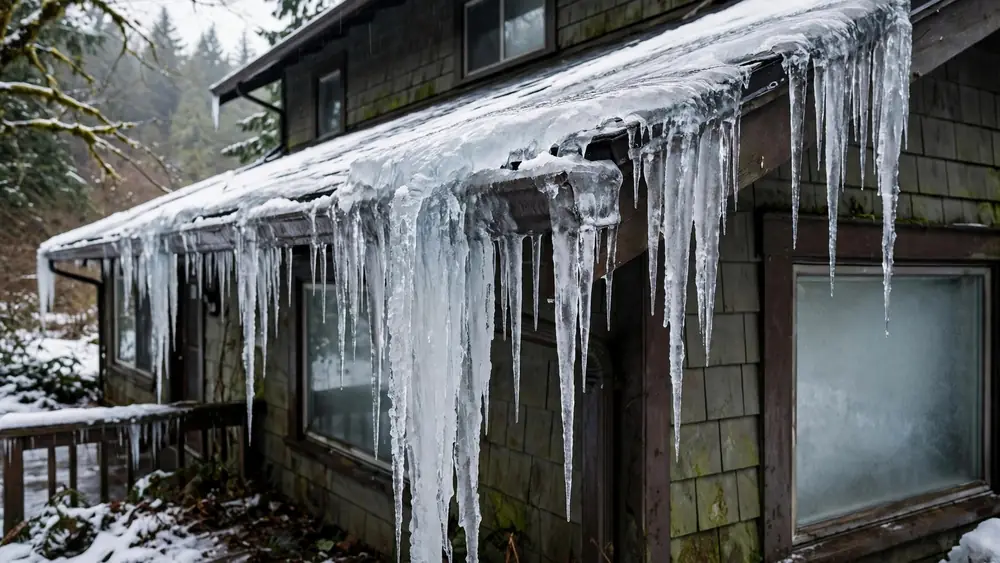
Ice dams on snowy roofs
Flood claims recorded in Deschutes County
Bend sits in Deschutes County. FEMA publishes every National Flood Insurance Program claim with personal details removed, which gives a plain record of where water has reached insured buildings here.
| Measure | Count |
|---|---|
| Flood insurance claims on record | 21 |
| Year with the most claims | 1993 (3) |
| Largest named event | Flooding (2) |
| Claims outside high-risk A and V zones | 61% |
| Claims on buildings built before 1975 | 42% |
County-wide counts of insured claims only. Uninsured losses, burst pipes and appliance leaks are not in this data.
What the Bend claim record shows
About 61% of claims with a recorded zone came from outside the high-risk A and V zones, so a moderate-risk label does not mean a Bend home stays dry.
A newer Bend home is not exempt: 58% of claims with a known build date involved homes built in 1975 or later.
Federal disaster history for Deschutes County
FEMA lists 20 federal declarations covering Deschutes County. The most common types are fire (12), biological (2) and severe storm (2). The latest are Akawa Butte Fire in 2026, Flat Fire in 2025 and Mile Marker 132 Fire in 2024. If your loss falls inside an open declaration, Bend homeowners can check DisasterAssistance.gov as well as their insurance policy.
Bend weather and your home
Weather records for Bend from 2015 through 2024 average 23 inches of precipitation a year, and December and January are the wettest months. The area averages 1.6 days a year with an inch or more.
Bend falls to 20°F or below on about 21 nights a year, which puts pipes in exterior walls, crawl spaces and garages at risk.
When rain falls in Bend
Seasonal averages for Bend, 2015 through 2024. Plan roof, gutter and sump pump checks before the wettest stretch.
| Season | Average | Share of year |
|---|---|---|
| January to March | 8.0 in | 35% |
| April to June | 4.5 in | 19% |
| July to September | 1.2 in | 5% |
| October to December | 9.3 in | 40% |
Modeled from Open-Meteo historical weather data. Precipitation includes rain and melted snow.
Bend home checklist from these records
- Don't rely on recent quiet years. Only 0% of Deschutes County claims date from 2015 or later, so older floods still show what can happen.
- Insulate exposed pipes before 21-plus hard-freeze nights arrive, and know your main shutoff.
- Check roof flashing and drains before December, the wettest month in Bend.
- Keep dated photos of each room. After Flooding, 2 insured Deschutes County owners filed claims at about the same time.
What to tell the Bend contractor
- Whether the pipe is in a garage or crawl space
- Whether the home is a vacation rental
- Whether ice is at the eaves
Services Bend callers ask about
Questions
Bend water damage questions
What if I'm out of town when it freezes?
Have someone check the home, or use a temperature alarm, and shut off and drain long-absent homes.
Is my Bend contractor licensed?
You can look them up with the Oregon Construction Contractors Board.[4]