
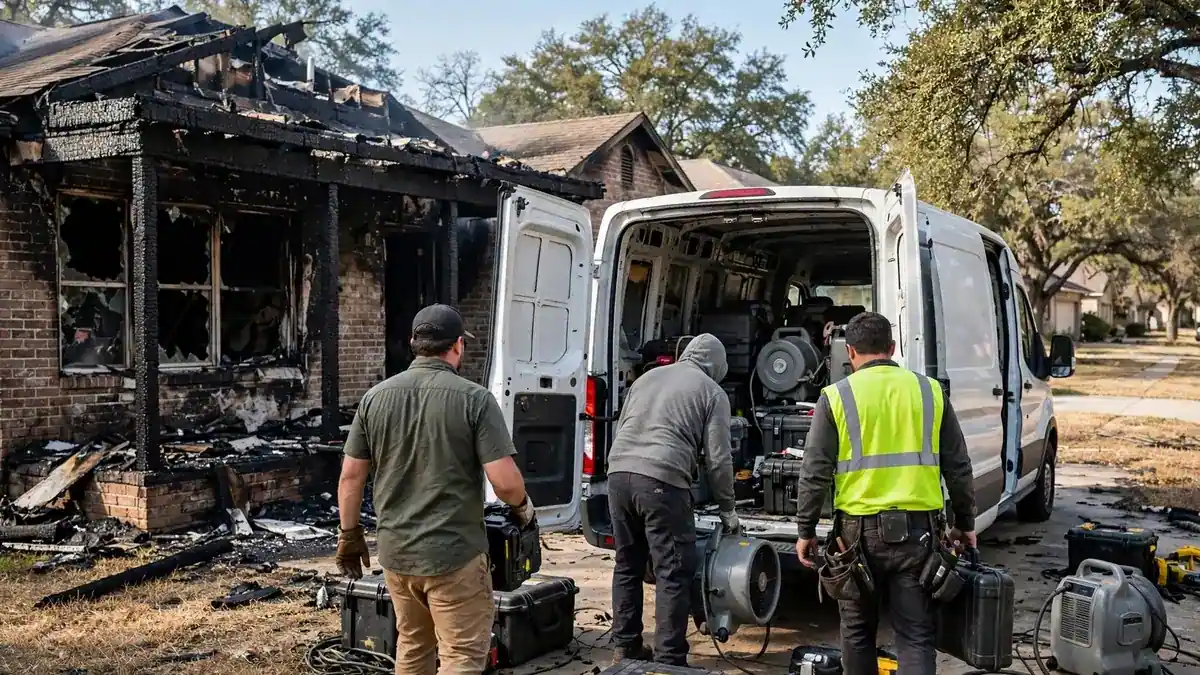
Key facts: Fort Lauderdale Fire Damage
- After a fire in Fort Lauderdale, heat and humidity make firefighting water the next urgent problem, along with the soot itself.
- Closed-up homes stay damp without power.
- Ask for temporary power or drying plans early, because mold can start on wet materials within days.
Fire and humidity
Closed-up homes stay damp without power. Ask for temporary power or drying plans early, because mold can start on wet materials within days.
Boats, garages and fuel
Canal homes may store fuel and batteries in garages. Tell firefighters and contractors what was stored, since burned chemicals change the cleanup.
Fire history in Broward County
FEMA lists 3 fire-related federal declarations covering Broward County, most recently Fl-Fires 04/15/99 in 1999.
Across all incident types, Broward County has 43 federal declarations on record, and any of them may open aid for Fort Lauderdale residents that insurance does not cover.
Protecting a fire-damaged Fort Lauderdale home
Fort Lauderdale averages 69 inches of precipitation a year, with February the driest month and September and June the wettest. Fire-damaged homes opened up by firefighting are exposed to that weather, so board-up and roof tarping matter quickly.
Fire services in Fort Lauderdale
Questions
Fort Lauderdale fire damage questions
Should I run the AC after a fire?
Not until it has been checked, as it can spread soot.
Who secures the house?
A contractor can usually arrange board-up, and your insurer may ask you to protect the property.