
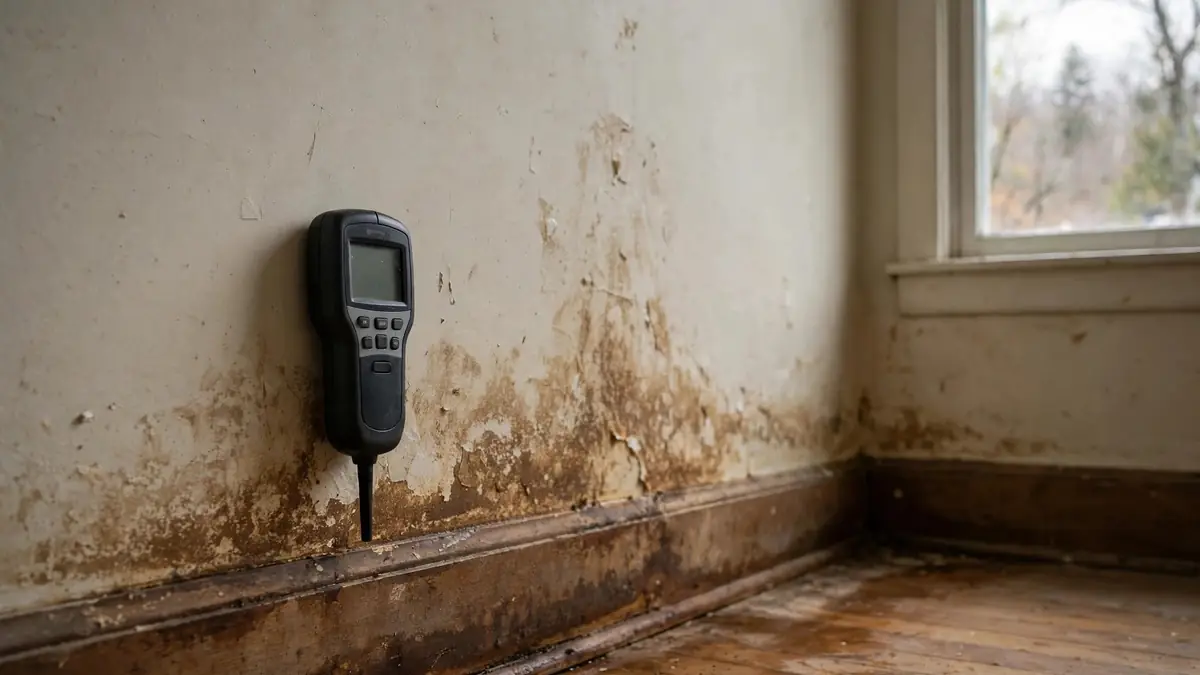
Key facts: Wet Drywall: Keep or Cut
- Wet insulation behind a wall is a common reason to open it.
- Flood cuts expose wall cavities.
- Test for lead and asbestos in older homes.[1]
Signs it should come out
- Crumbling or sagging
- Peeling paper or swelling
- Contaminated water
- Wet insulation behind it
- Mold on the back side
Wet Drywall: Keep or Cut?: what to look for
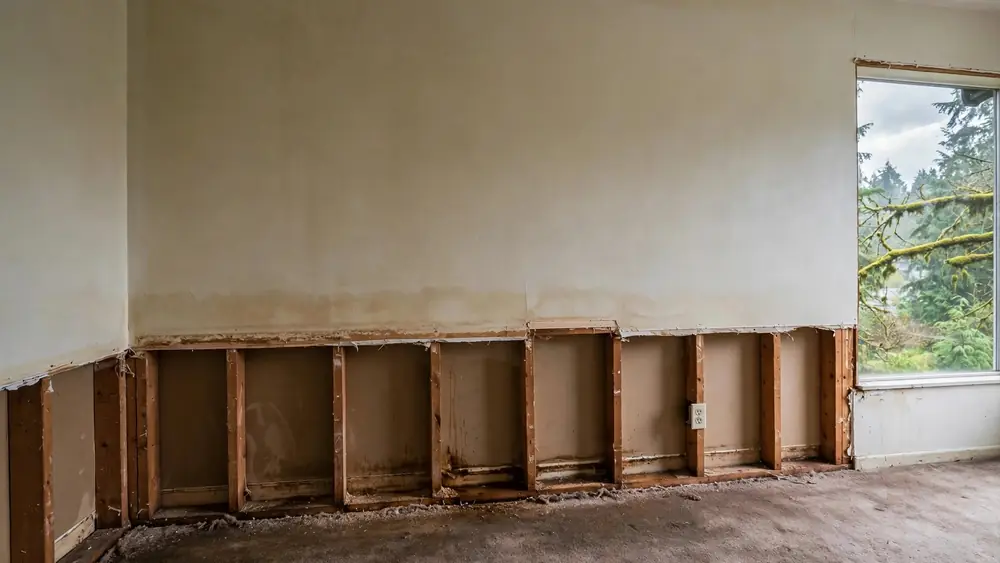
What a flood cut does
A straight cut above the water line removes wet board and lets air reach studs. The line also makes the repair easier later.
Ceilings are a special case
Wet ceiling drywall is heavier than it looks, and it can come down without warning. Never stand under a sag. If water is pooling, keep the room clear and call a professional, who can drain it in a controlled way before it falls. Insulation above the ceiling usually needs to be taken out.
How to check it yourself
Press gently along the base of the wall. Firm drywall with light staining may be fine, while soft or spongy board has lost its strength. Look for bubbling paint or lifting tape. A pin meter gives a much better answer than touch, and a contractor can also check the insulation behind it, which often decides the question.
Questions
Questions about wet drywall: keep or cut?
How high is a flood cut?
Usually about a foot above the wet line, and often to a standard height for simple patching.