
Key facts: Water Heater Leak
- A leaking tank body can't normally be repaired.
- Hot water can scald.
- Attic and upstairs tanks can cause major damage.
Safe shutdown
- 1
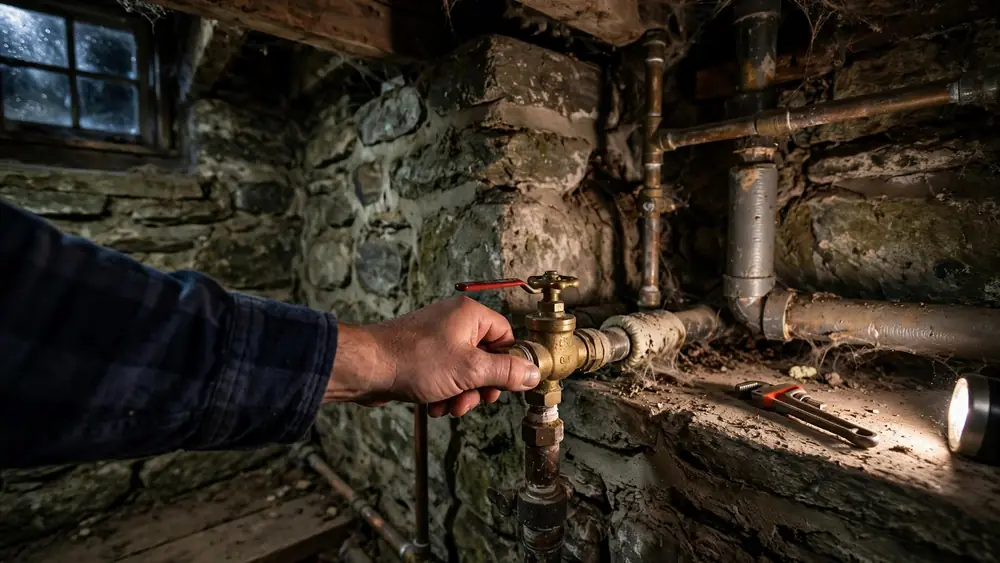
Close the cold supply
The valve is usually on the pipe above the tank.
- 2
Cut the energy
Turn the gas control to off, or switch off the breaker.
- 3
Keep clear of hot water
Let it cool before touching fittings.
- 4
Contain it
Use towels and a wet vac on clean water.
- 5
Call a plumber
Then call about any wet walls or floors.
Water Heater Leak at a glance
Where is the leak?
Water at the top often means a loose connection, which a plumber can fix. A dripping pipe on the side may be the temperature and pressure relief valve, and it can signal a real pressure problem, so don't cap it. Water pooling under the tank, with no leak above, usually means the tank itself has corroded and needs replacing.
Why location matters
A garage heater leaks onto concrete. One in an attic or upstairs closet can bring down a ceiling. If yours sits above living space, check for a drain pan with a line running somewhere useful, and consider a leak alarm that sounds before anyone sees a stain.
FAQ
Water heater questions
How do I know how old my heater is?
The serial number often encodes the date, and the maker can confirm it.
Is the water safe to use?
With the heater shut off, cold water is normally unaffected.