
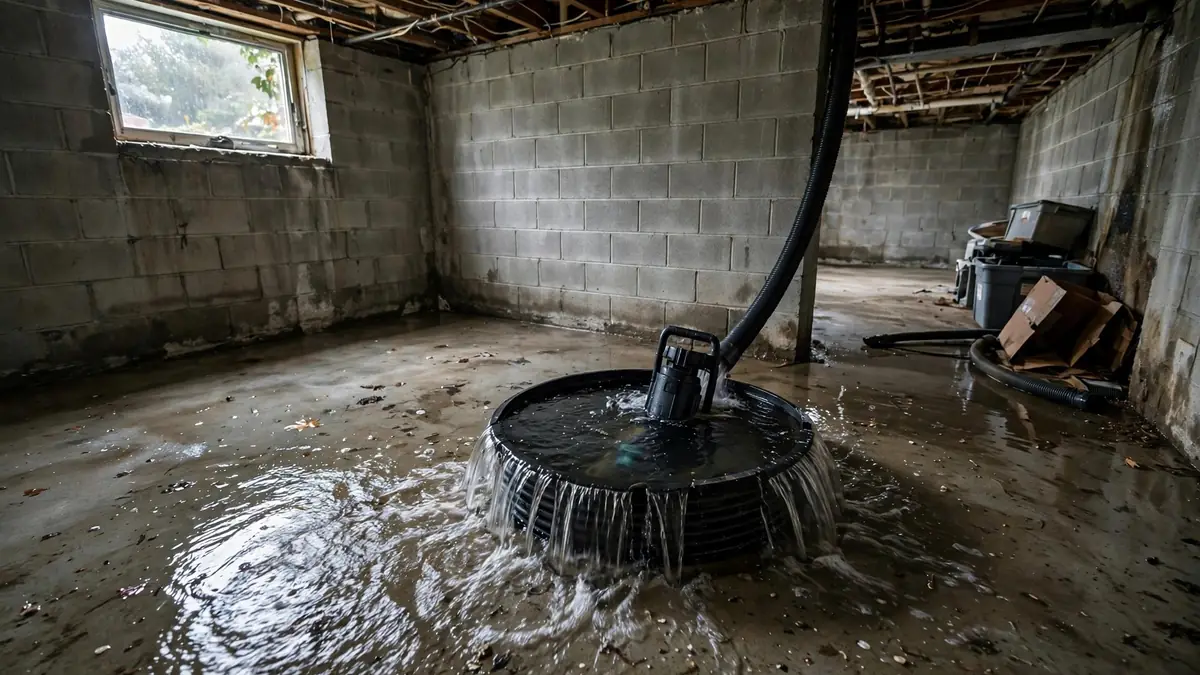
Key facts: Sump Pump Failure
- A sump lifts water from a pit under the floor.[1]
- Power cuts are a common cause.
- Battery backups and alarms add protection.
Quick checks
- Is the pump plugged in and the breaker on?
- Is the float stuck?
- Is the discharge frozen or clogged?
- Is the check valve working?
Sump Pump Failure: what to look for
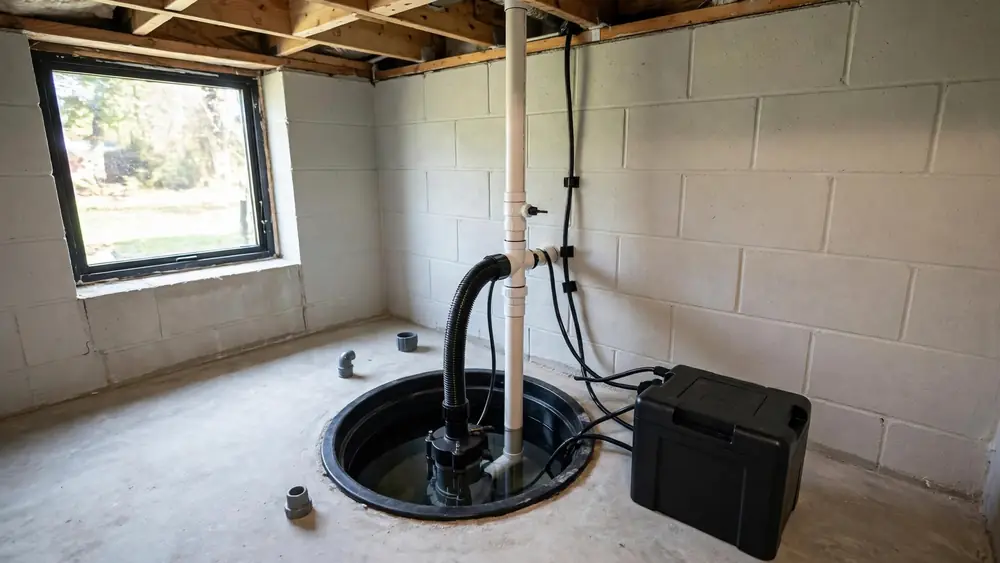
Afterwards
Extract the water, dry the room, and consider a battery backup. See basement cleanup.
Choosing better protection
A battery backup keeps pumping during an outage, and a high-water alarm warns you early. Test the pump a few times a year by pouring water into the pit, and keep the outdoor discharge line clear of leaves and ice. If the primary pump runs constantly in storms, ask whether it is sized correctly for your home.
Safety before you step down
Do not walk into standing water until you know the power is off in that area. If the panel is in the basement and the floor is wet, call an electrician or your utility. Water can also rise quickly if the storm is still going, so keep an eye on the level and stay near the stairs.
Questions
Questions about sump pump failure
How long do sump pumps last?
It varies. Test yours by pouring water in the pit before storm season.