
Key facts: A Renter's Guide
- Report in writing and keep a copy.
- Landlord duties vary by state.
- Renters insurance is separate from the owner's policy.
What to do first
- 1
Stop the water if you can
Use the fixture valve, or call the emergency maintenance line.
- 2
Notify the landlord
Text or email as well as calling.
- 3
Document
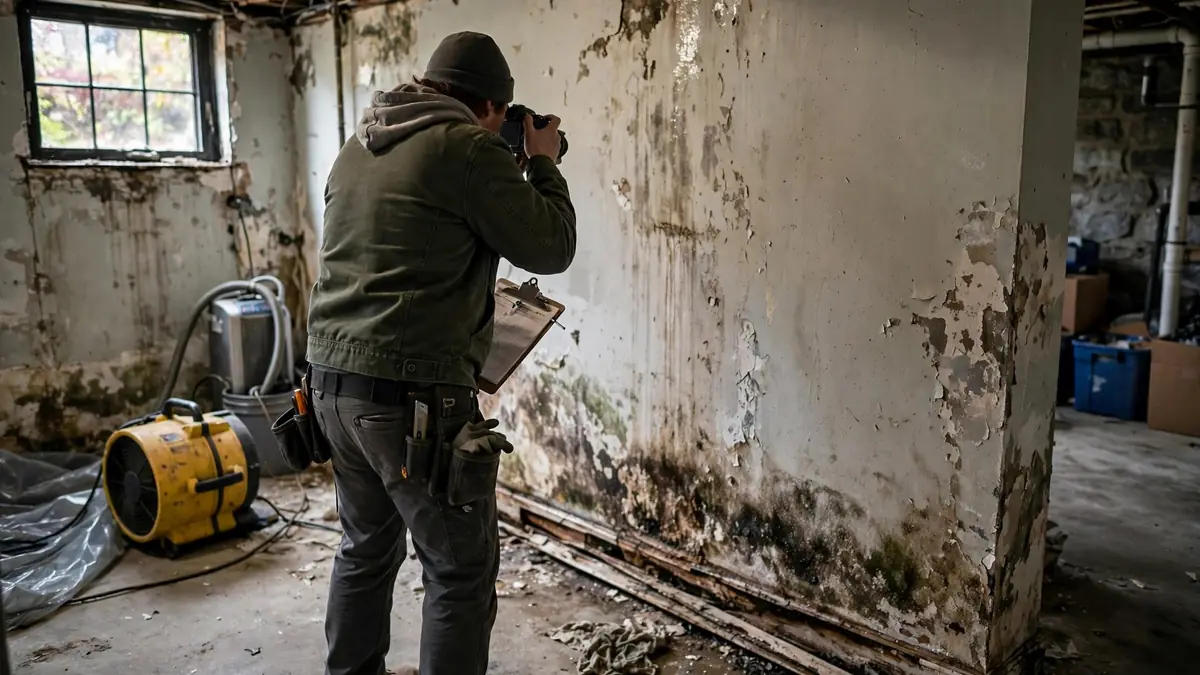
Photograph the source, walls, floors and belongings.
- 4
Protect belongings
Move what you can to a dry place.
- 5
Call your insurer
Ask about damaged belongings and temporary housing.
A Renter's Guide at a glance
Who is responsible for what?
Generally, the owner deals with the structure, including walls, floors, plumbing and repairs. You typically insure your own belongings. If your actions caused the leak, you could face a claim, so don't guess about fault. State and local law sets landlord duties, and a local tenant organization or legal aid office can tell you where you stand. This isn't legal advice.
If repairs don't happen
Keep sending written updates, and note how long each problem lasts. Standing water or ongoing dampness can lead to mold, which is a health concern.[1] If nothing changes, contact your local housing or code enforcement office before withholding rent, because rules differ.
FAQ
Renter questions
Can I call a contractor myself?
You can call for advice, but building work usually needs the owner's approval.
Does renters insurance cover flood?
Usually not without separate flood coverage.